Time overruns are almost universal on major projects. Whether the project is a metro extension, a utility-scale solar plant, a desalination facility, a high-rise tower or a remote resources camp, the commercial consequences of lateness and lost productivity regularly become the largest numbers in the dispute.
Yet the quantum of delay and disruption is where many otherwise well-founded claims fail. Tribunals are rarely persuaded by a number on its own. They want to see the entitlement, the causal chain, the period, the resources affected, and the records that prove the money was actually spent.
This series sets out how a quantum expert approaches that task, step by step.
| Part | Title | Core question |
|---|---|---|
| 1 | Delay Is Not Disruption: Why the Distinction Decides the Claim | Is this a time claim, a productivity claim, or both? |
| 2 | Entitlement Before Quantum: The Basis of Recovery | Under what mechanism, and on what valuation basis, is the claim made? |
| 3 | Mapping the Heads of Claim | What categories of loss could be in play? |
| 4 | Labour Costs Under Delay | How does delay change what the workforce costs? |
| 5 | Time-Related Preliminaries: Proving Actual Cost | What did it actually cost to keep the site running longer? |
| 6 | When the Contract Sets the Price: Valuation Other Than Cost | When do rates, not ledgers, govern the answer? |
| 7 | Which Period? Assessing Prolongation When the Effect Was Felt | When were the extra costs actually incurred? |
| 8 | Overheads, Profit, Finance and Lost Production | What sits beyond site-level cost? |
| 9 | Concurrency, Global Claims and the Causal Link | What happens when more than one cause is at work? |
| 10 | Proven, Estimated or Speculative: The Expert's Evidential Discipline | How much weight can the number bear? |
A note on jurisdiction. Much of the leading authority on delay quantum comes from England, Scotland and other common law jurisdictions. In the UAE and wider GCC, those decisions are not binding, but they are frequently cited as persuasive in arbitration (including under DIAC and arbitrateAD rules) and in the DIFC Courts, and they shape how international experts and tribunals think. Where the UAE Civil Code or another civil law regime governs, the legal test for compensation must be confirmed by qualified local counsel. This series addresses the quantum methodology; it is not legal advice.
All parts in the series
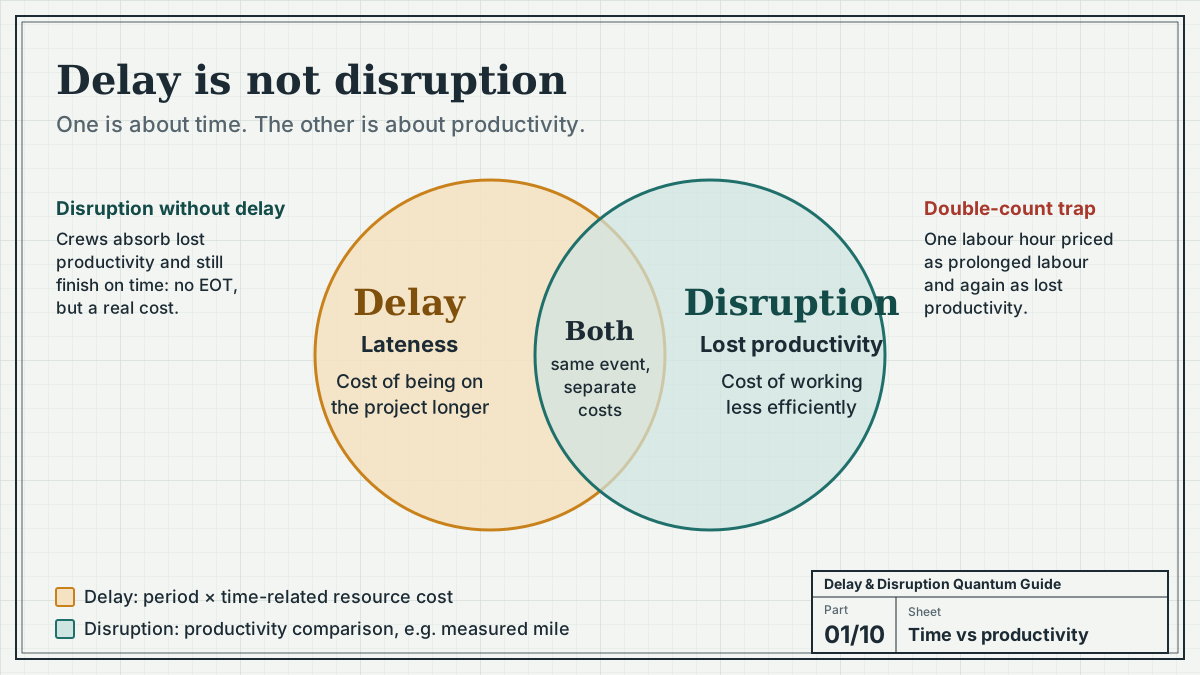 Part 1
Delay Is Not Disruption: Why the Distinction Decides the Claim
Delay is about time; disruption is about productivity. Why separating the two is the first step in any credible construction quantum claim.
Read part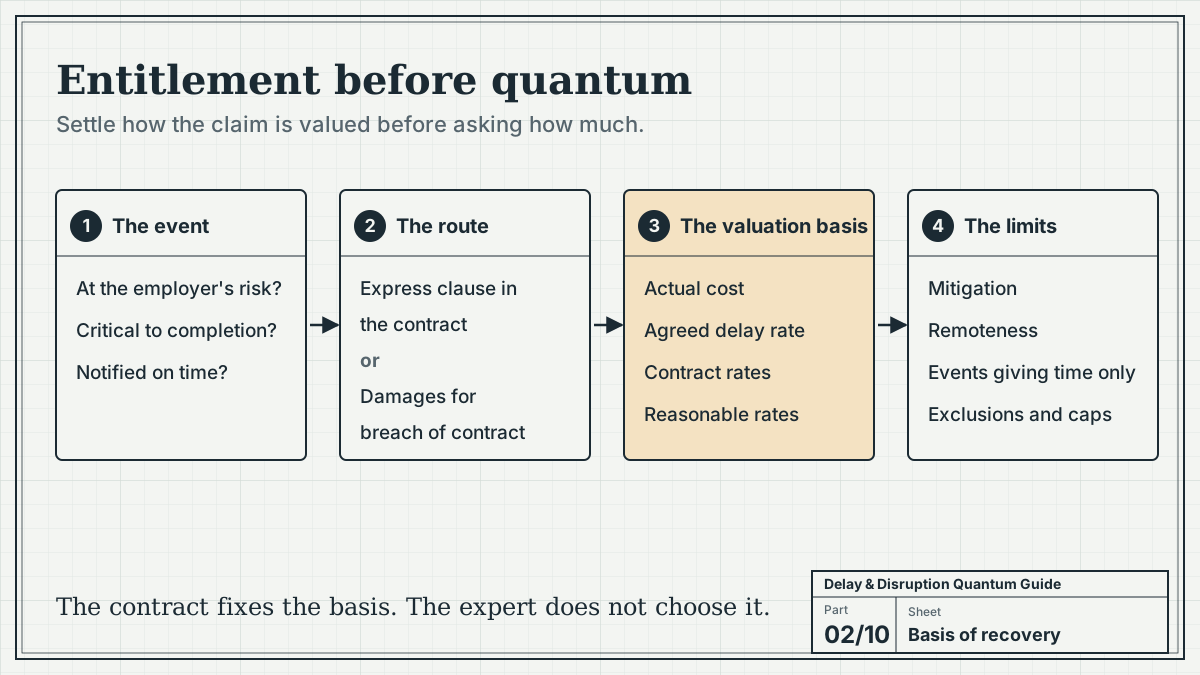 Part 2
Entitlement Before Quantum: The Basis of Recovery for Delay Costs
Loss and expense, contractual rates or damages? How the basis of entitlement determines how delay costs are valued — and why it must be settled first.
Read part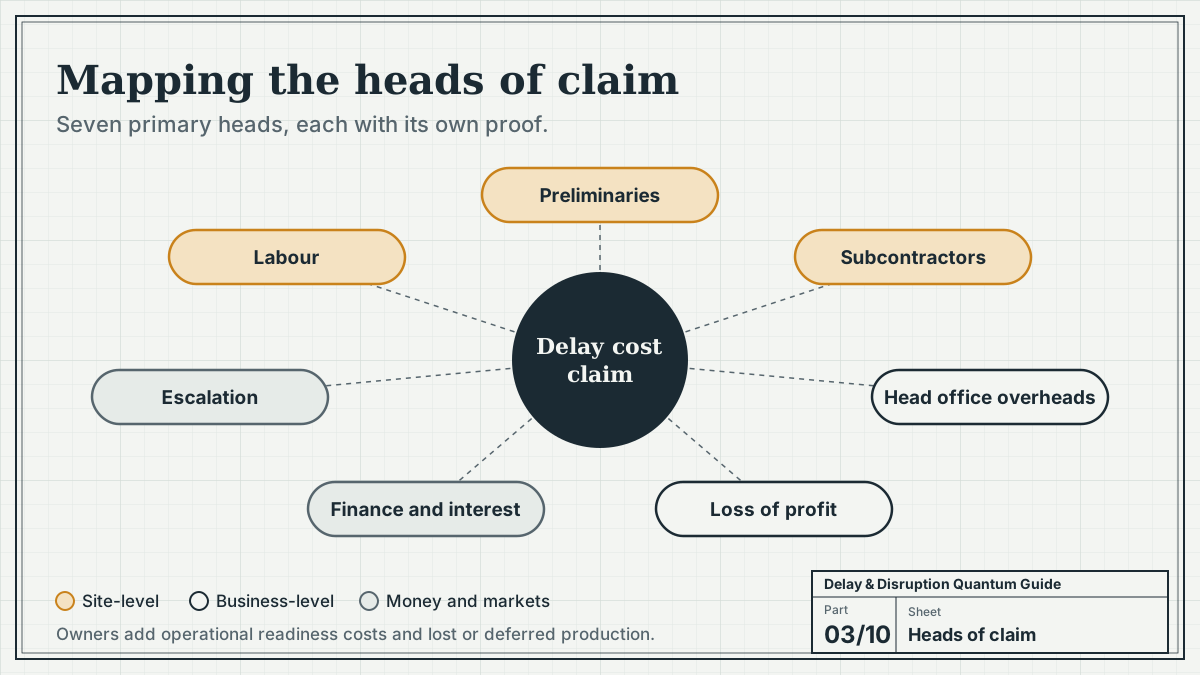 Part 3
Mapping the Heads of Claim: A Taxonomy of Delay and Disruption Loss
From preliminaries to lost production: a structured taxonomy of the heads of claim that arise from delay and disruption, and how to scope them early.
Read part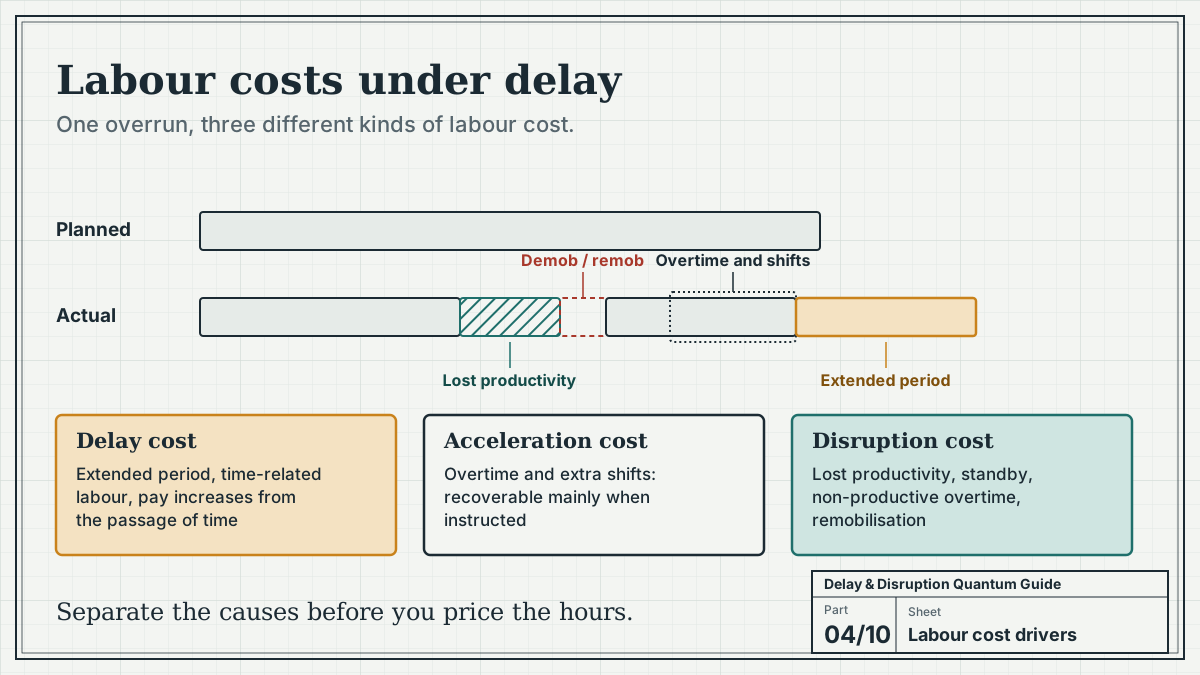 Part 4
Labour Costs Under Delay: Extended Duration, Overtime and Non-Productive Time
How delay changes what a workforce costs — extended periods, overtime, pay increases, non-productive labour and remobilisation — and how to evidence it.
Read part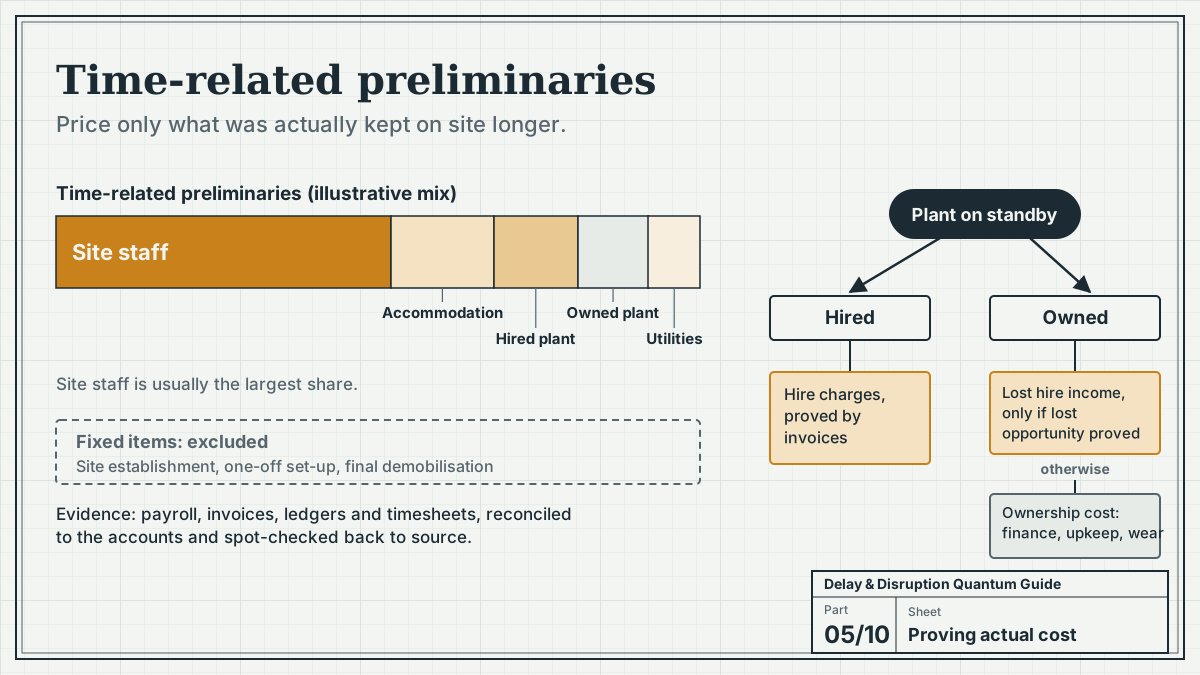 Part 5
Time-Related Preliminaries: Proving the Actual Cost of Prolongation
Site staff, accommodation, plant and facilities: how to identify, separate and prove the actual cost of time-related preliminaries in a delay claim.
Read part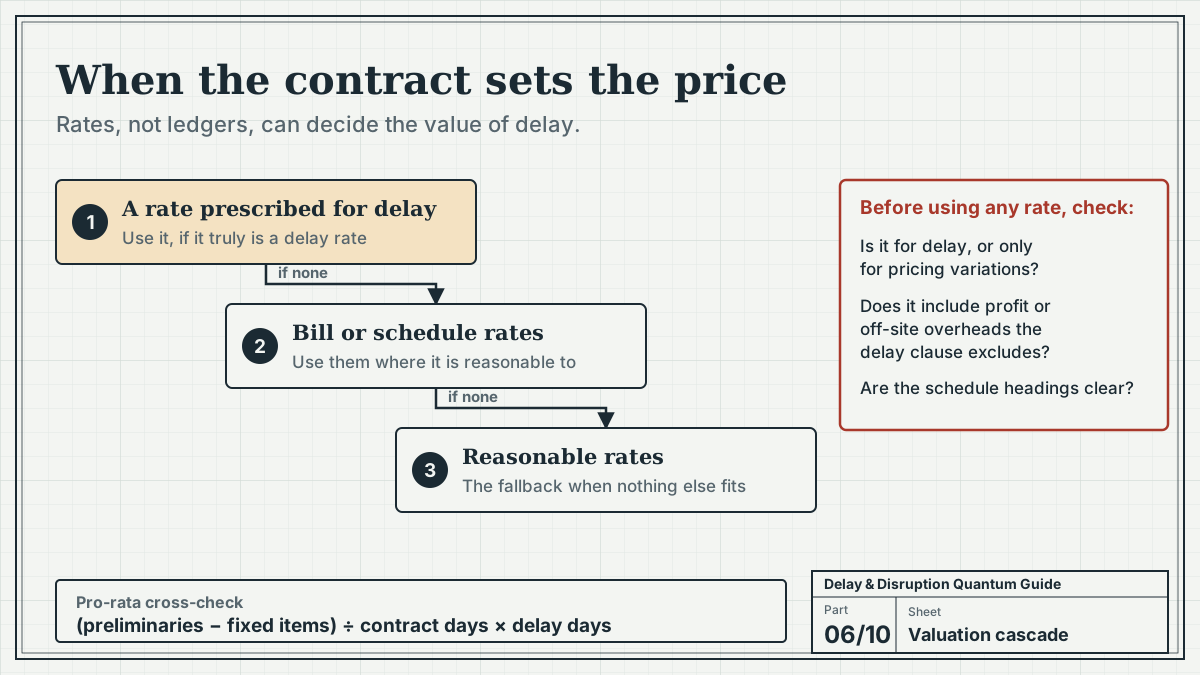 Part 6
When the Contract Sets the Price: Valuing Delay on a Basis Other Than Cost
Agreed delay rates, bill rates and reasonable rates: when contract mechanisms, not ledgers, determine the value of delay — and the drafting traps to avoid.
Read part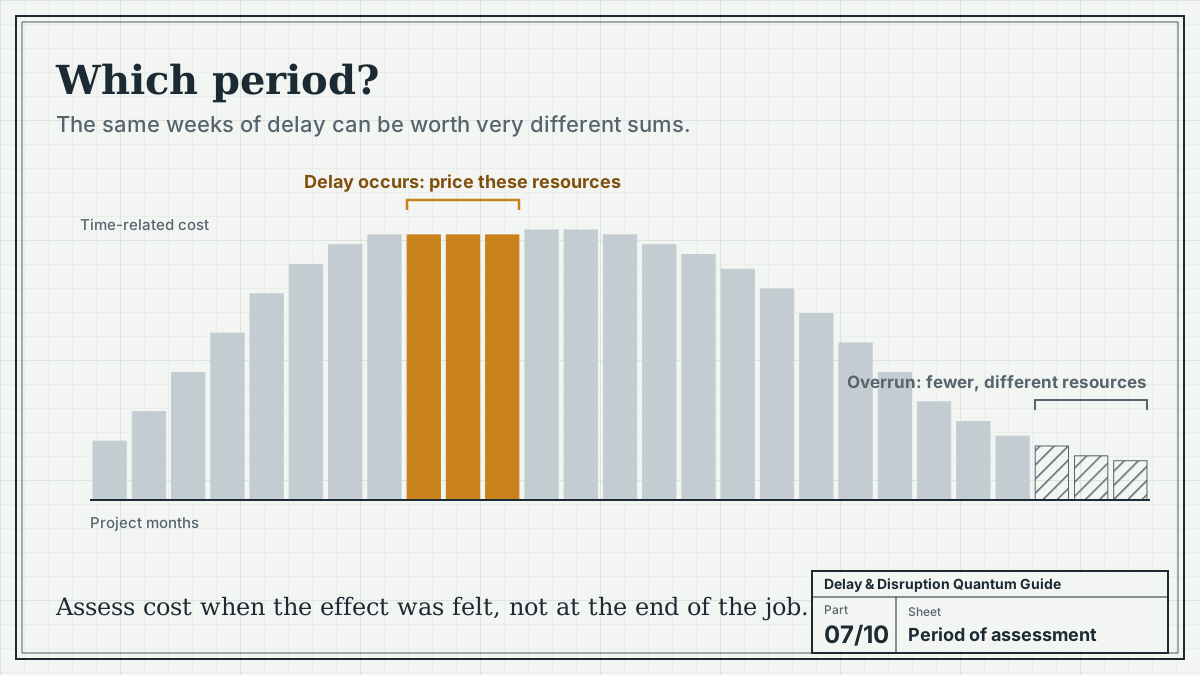 Part 7
Which Period? Assessing Prolongation Costs When the Effect Was Felt
Should delay costs be priced at the time of the delay or at the end of the project? Why the period of assessment can swing a prolongation claim dramatically.
Read part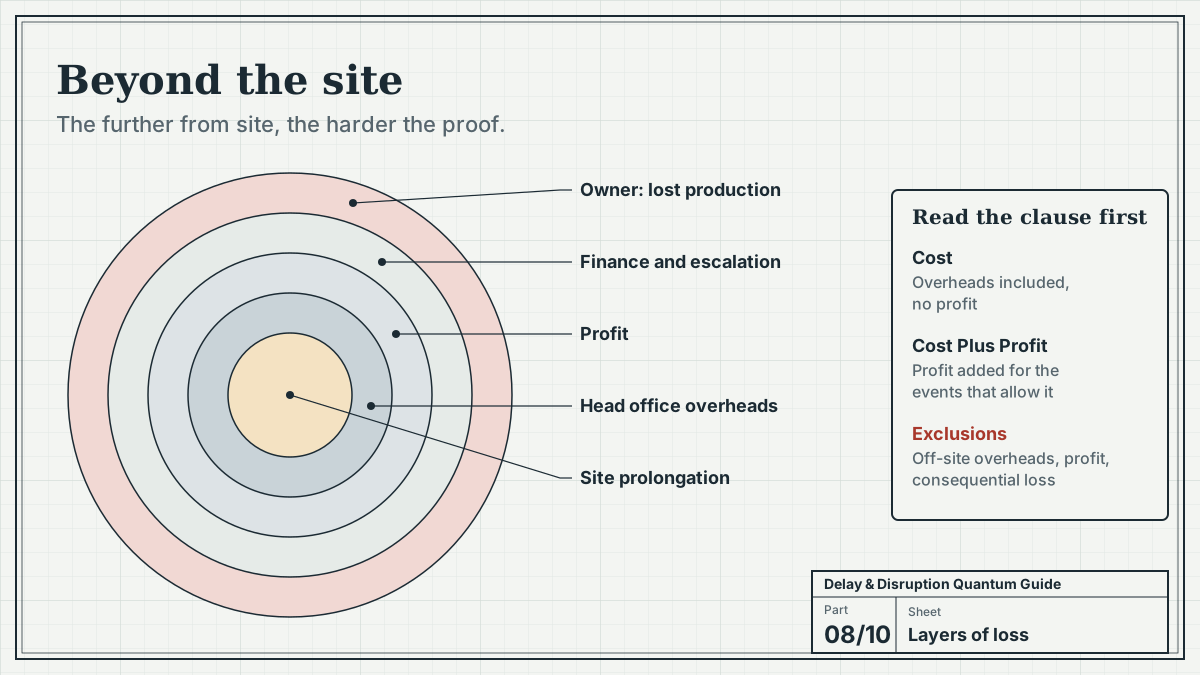 Part 8
Beyond the Site: Head Office Overheads, Profit, Finance and Lost Production
Head office overheads, loss of profit, escalation, financing charges and delayed production revenue: the heads of delay loss that sit beyond site-level cost.
Read part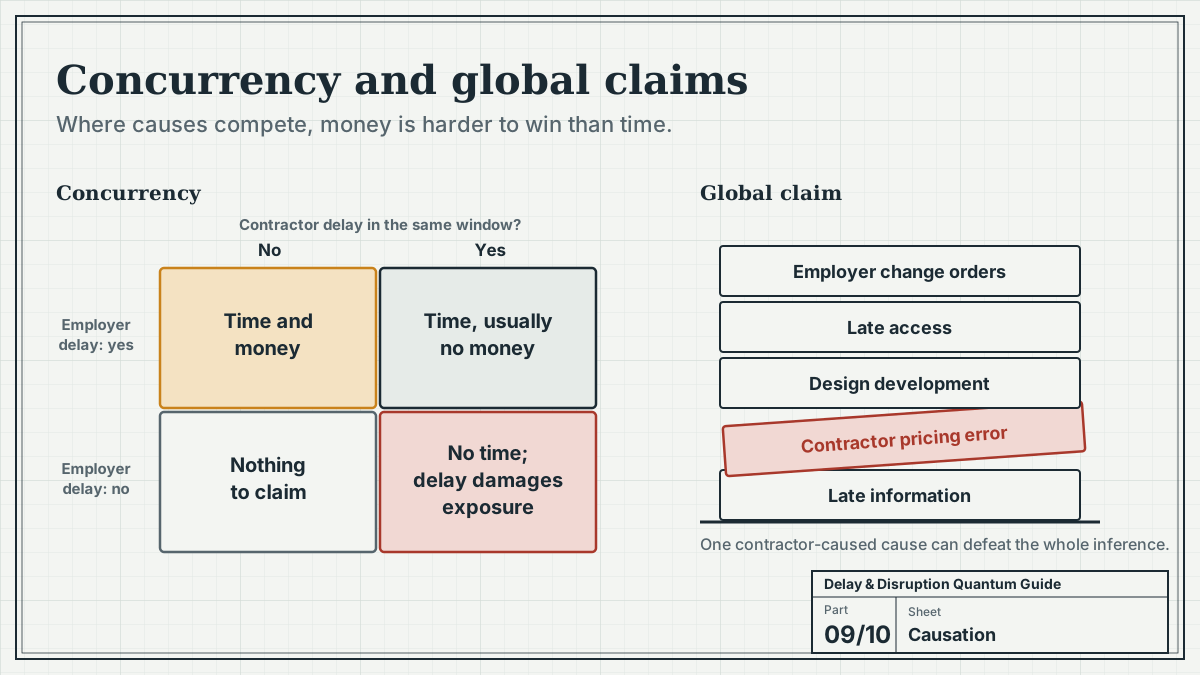 Part 9
Concurrency, Global Claims and the Causal Link
How concurrent delay affects the recovery of delay costs, why global claims usually fail, and how to build the cause-and-effect link tribunals require.
Read part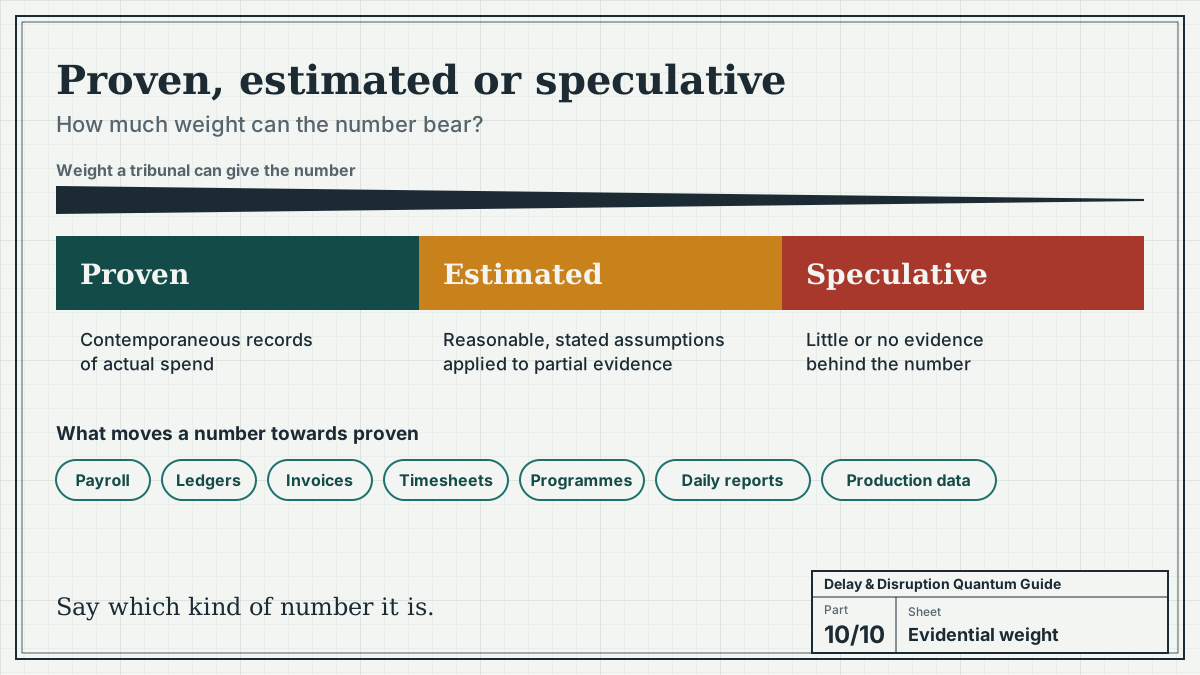 Part 10
Proven, Estimated or Speculative: The Expert's Evidential Discipline
Can delay and disruption loss be valued without records? Why the distinction between proven, estimated and speculative loss often matters more than the number.
Read part